Utility Trenches
Utility Trenching in Edison: Water, Sewer, Electric & Gas
Edison Excavation digs trenches for water service lines, sewer laterals, electrical conduit, and gas runs, including gas lines to standby generators, throughout the Edison area. The NJ One Call ticket goes in first, the trench is cut to the depth your plans or code require, and it closes in compacted lifts. Your plumber or electrician makes the connection; the ground is our part.
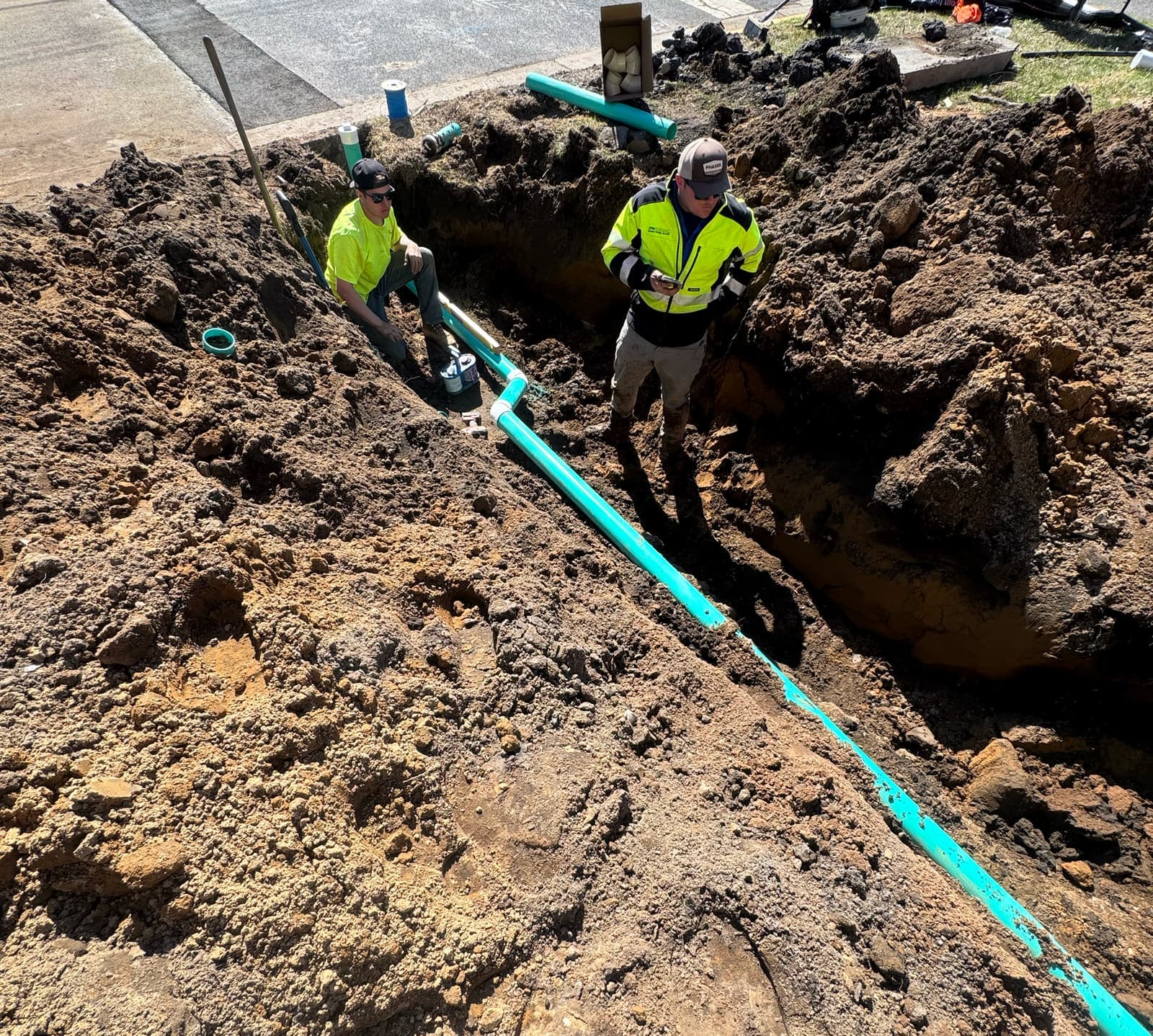
How each trench is built
A trench is easy to do poorly. The standard here is straight, safe, and closed back up so the yard recovers.
Depth and Fall Held
Your plumber or electrician sets the depth, and a sewer lateral needs steady fall from house to street. The bottom gets checked against those numbers as the bucket moves along, so the pipe can be laid without regrading the trench by hand.
Proper Bedding and Backfill
Bedding beneath the pipe, hand-placed backfill around it, warning tape where the utility calls for it, then backfill compacted in lifts so the lawn doesn't sink into a stripe next spring.
Markout and Trench Safety
An NJ One Call 811 ticket comes before every dig, without exception. Where depth calls for it, the walls are sloped or benched before anyone steps down into the trench.
One clean line across the yard
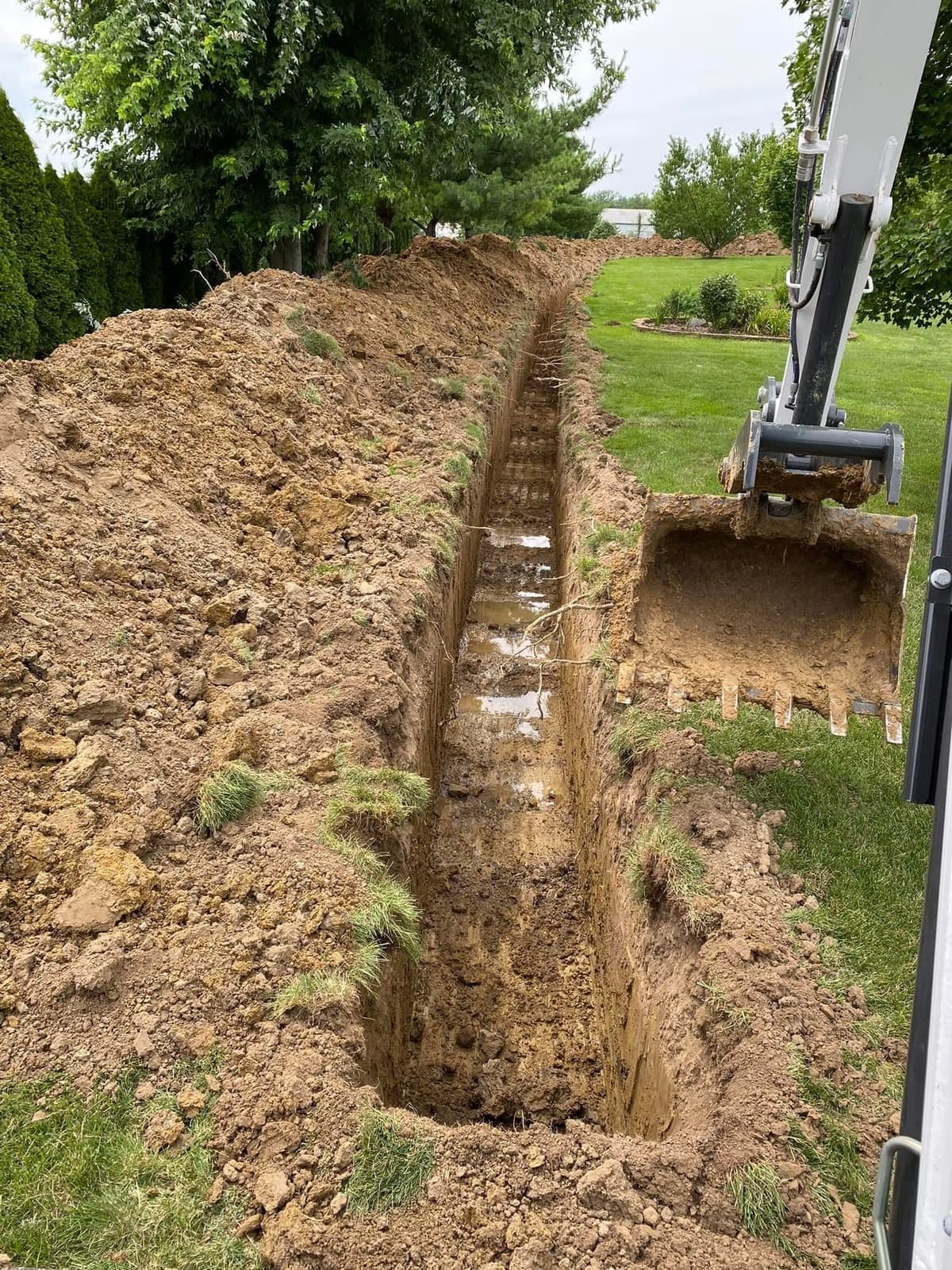
A trench through a finished lawn does not have to look like a construction zone. A mini excavator with a narrow bucket cuts a conduit run to a detached garage, EV charger, generator pad, or pool equipment as one line, with the spoil kept on one side, topsoil in its own pile, and the trench closed the way it opened.
Where we work
The work is for homeowners and directly for the trades. The dig date gets set with your plumber or electrician so the trench is open for their work and their inspection, then backfilled. If you already have one of them lined up, the timing gets worked out with them directly.
Trenching cost per linear foot
Typical New Jersey ranges, not our quote: about $5 to $25 per linear foot for residential trenching in open ground. A shallow conduit run through a lawn is at the low end. A deep water service, or any run crossing a driveway or walkway, is at the high end, and cutting and patching asphalt or concrete roughly doubles the per-foot cost.
Length, depth, soil, and surface restoration set the price, along with how much hand digging the markout requires near existing lines. Say what's going in the ground and where it runs. The run gets walked, the complications get named up front, and one number goes in writing.
The One Call clock
A utility trench is exactly the kind of digging New Jersey's One Call law was written for. Under N.J.S.A. 48:2-82 and N.J.A.C. 14:2-3.1, notice has to reach NJ One Call through 811 at least three full business days before excavation starts, not counting weekends or holidays, and no more than 10 business days before. If a homeowner hires a contractor, the contractor places that call.
A routine ticket follows a simple rhythm: wait the three business days, start within 10, and finish before the ticket expires 45 business days out. A trench that is planned for one week and slips by a month may need a fresh ticket, which is one more reason to set the dig date with the trade before the call goes in.
Marked lines, and the ones that aren't
Each utility marks its own facilities with paint or flags. The electric company marks up to the meter. Everything after that is private, and private lines are not marked unless the owner is a One Call member.
Those private lines are exactly what a backyard trench tends to cross: the feed to a detached garage or shed, landscape and lamp-post lighting, a pool pump or heater circuit, an old line to a well or sprinkler controller. If you know a run exists, sketch where it goes. If nobody knows, a private locating service is an option.
Near any marked line, NJ One Call guidance calls for hand digging within 2 feet on either side. The machine stops short, the line gets exposed with a shovel, and the trench continues past it. If a gas line is ever damaged, the calls are 911, the gas company, and 811.
Depth is set by what goes in the trench
There is no single trench depth. New Jersey's residential code, the 2021 IRC New Jersey edition, sets 36 inches as the frost depth for Middlesex, Union, and the other northern counties, and it is the figure water service lines are kept below so they do not freeze. Sewer laterals run from the house toward the main at whatever fall your plumber's plan shows.
Electrical conduit depth depends on the type of conduit and what it crosses, and your electrician sets it. Gas service to a generator or pool heater follows the plumber's spec and the gas company's rules. In each case the trade gives the number before the dig, and the trench gets cut to it.
Crossing the sidewalk or the curb
A sewer lateral or water service often has to reach a main in the street, which puts part of the trench in the public right-of-way. Edison Township's published permit flow charts require a Road Opening Permit from the Department of Public Works for work in the right-of-way, which includes the sidewalk, curb, and driveway apron.
Other towns handle right-of-way work through their own public works or engineering office, so in Metuchen, Highland Park, Rahway, or anywhere else, check with that municipality before the trench is scheduled. The water or sewer utility may have its own connection rules on top of that, and your plumber will know them.
What the moraine can leave in a trench line
North Middlesex has an unusual piece of geology running through it. The Perth Amboy Moraine, left at the southern limit of the Laurentide Ice Sheet, crosses Perth Amboy, Woodbridge, Edison, and Metuchen and follows the Edison and South Plainfield border. Glacial deposits like that can mean mixed soils along one run and buried cobbles or boulders where nobody expected them.
A long trench samples more ground than almost any other residential dig, so it is more likely to hit one. That is not a reason to worry, only a reason the site walk asks about the route and, on a long or deep run, why digging a test hole first can be worth it.
Spoil, backfill, and the extra yards
Most of what comes out of a trench goes back in. A 100 foot run, 2 feet wide and 3 feet deep, moves 600 cubic feet, about 22 cubic yards. The pipe and its bedding take up some of that space, so a little spoil is usually left over, and rock or debris that should not go back near a pipe gets set aside.
In Edison, the township's flow charts require a soil export permit when 10 cubic yards or more leaves the site, so a long run with poor spoil can reach it. Leftover clean soil can often be spread to fill a low spot nearby instead of being hauled, which keeps the trucking off the bill.
What happens after you call
From the site walk to the final cleanup
1. Site Walk
We visit the property by appointment, check access and any constraints, and go over your plans or what you have in mind.
2. Marking & Layout
The layout is marked on the ground from the plan. Depths, lines, and elevations are set out before any digging starts.
3. The Work
The right machine for the access comes in, ground protection goes down where needed, and disturbance to lawns, trees, and hardscape is kept to a minimum.
4. Clean Handover
You're left with a site ready for the next step and a yard that's still in one piece.
Frequently Asked Questions
No. Regulated connections belong to your licensed plumber, gas fitter, or electrician. The trench gets opened and bedded, and it is backfilled after their work passes inspection. That division is standard on these jobs, and the dig is timed with your trade so the trench is open as briefly as possible.
As deep as the job requires. Water lines are kept below frost, and New Jersey's residential code puts frost depth at 36 inches for Middlesex and Union Counties. Sewer laterals follow the fall on your plumber's plan. Electrical depth comes from code and your electrician's spec. The trench is dug to the number, not a guess.
A narrow, compacted line, not a scar. Topsoil is kept separate from trench spoil, backfill is compacted in lifts so the line doesn't settle, and the surface is raked out. On finished lawns, ground protection goes down along the machine path too.
As a New Jersey market range, not a quote: residential trenching in open ground usually runs $5 to $25 per linear foot. Cutting through asphalt or concrete roughly doubles the per-foot cost, and deeper water-line trenches sit at the high end. The run gets walked and priced as one number.
Yes. The trench runs from the meter or tank to the generator pad at the depth your installer or plumber specifies, and it is backfilled after the line is inspected. The gas piping and connection remain with your licensed plumber or generator installer.
Yes, whenever the ground can be opened safely. A water service or sewer lateral that fails in January still has to be dug up. The trench is backfilled and compacted the same way, with final topsoil and seed in spring.
Not if it runs after the meter. Lines past the meter belong to the property owner, and NJ One Call members only mark their own facilities. Point out any private runs you know about before the dig, and those stretches get exposed carefully by hand.
Service Areas
- Edison· Middlesex County
- Metuchen· Middlesex County
- Piscataway· Middlesex County
- Woodbridge· Middlesex County
- Highland Park· Middlesex County
- South Plainfield· Middlesex County
- Perth Amboy· Middlesex County
- Carteret· Middlesex County
- Rahway· Union County
- Linden· Union County
- Plainfield· Union County
- Dunellen· Middlesex County
Edison, Metuchen, Piscataway, Woodbridge, and nearby Middlesex and Union County towns north of the Raritan.
Trade waiting on a trench? Tell us the run and we'll open it.
Site visits are by appointment. Share a few details about the project and a time gets set to walk the property together.