Diagnose, Then Dig
Yard Drainage Repair in Edison, NJ
Edison Excavation fixes yards that hold water, starting with diagnosis rather than digging. Standing water always has a reason: grade sloped the wrong way, downspouts emptying at the foundation, a clay layer that won't drain, or runoff coming from uphill. We trace where the water starts and where it belongs, then build that specific fix instead of reaching for a single product.
Start with the cause
Drainage jobs often get the wrong fix the first time because no one asked why the water was there. That question comes first.
Follow the Water, Then Plan
We walk the lot, ideally after rain, and track the water: where it lands, where it pools, and where the grade sends it. The plan comes from what the site shows, not a standard package.
Restore Positive Pitch
The most common cause is soil that has settled back toward the house. Rebuilding pitch away from the foundation with laser grade control is often the entire fix, with no pipe at all.
Route Water That Must Move
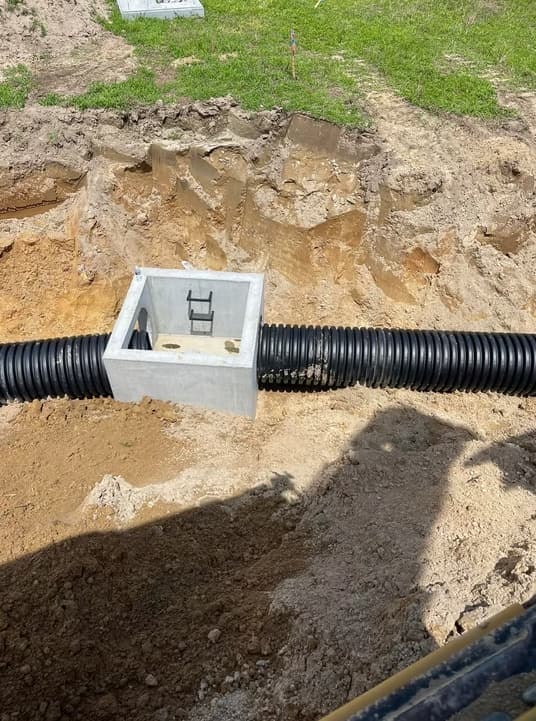
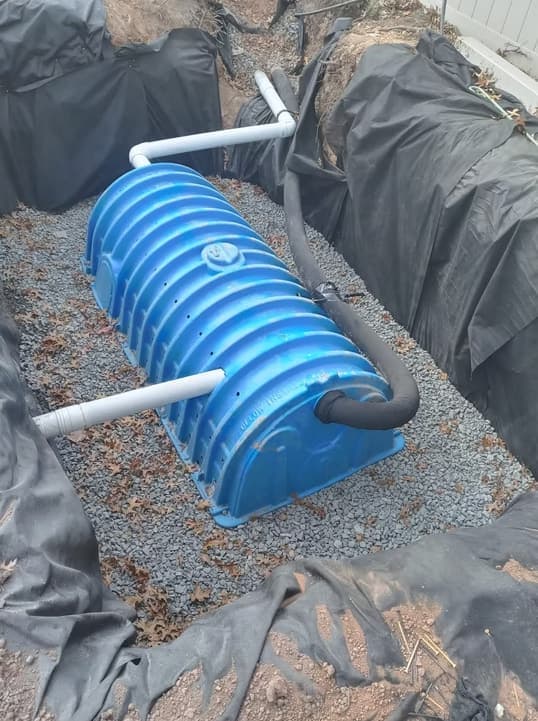
When runoff needs a path, we build one: shallow swales across the lawn, catch basins at collection points, buried downspout lines, curtain drains to cut off uphill flow, and dry wells where nothing can daylight.
The right tool for each kind of water
Each drainage method solves a different problem. A swale carries sheet runoff across a lawn. A catch basin takes water that pools in one spot. Buried downspout lines move roof water that clay can't absorb at the foundation. A curtain drain intercepts groundwater moving downhill from the next lot. Pitch any one of them as a cure-all and the yard floods again next spring. Diagnose first, and the fix is often simpler and cheaper than a one-size quote.
Where we work
Across Edison, Metuchen, and Piscataway, the ground often sets the rules: heavy clay or old fill over a seasonal high water table means water soaks in slowly, so most fixes route it away instead of trying to infiltrate it. Compact machines cut swales and set basins in finished, fenced yards without tearing them up, and NJ One Call (811) marks the utilities before any of it begins.
What happens after you call
From the site walk to the final cleanup
1. Site Walk
We visit the property by appointment, check access and any constraints, and go over your plans or what you have in mind.
2. Marking & Layout
The layout is set on the ground with laser accuracy. Depths, lines, and elevations are marked before any digging starts.
3. The Work
The right machine for the access comes in, ground protection goes down where needed, and disturbance to lawns, trees, and hardscape is kept to a minimum.
4. Clean Handover
You're left with a site ready for the next step and a yard that's still in one piece.
Frequently Asked Questions
Around here, clay is the usual reason. Water moves through it slowly, and a seasonal high water table in spring makes it worse. If the surrounding grade also pitches toward the low spot, the water has nowhere to go. The right fix depends on which factor is doing the most damage, and the walk-through sorts that out.
They address different problems. If the surface grade is sending water the wrong way, regrading or a swale fixes it with no pipe. If water is moving through the ground, a subsurface French drain is the right tool. Many yards need one, not both, and we'll tell you which.
Often, yes. Rebuilding pitch away from the house, burying downspouts to carry roof water well clear, and catching uphill flow with a curtain drain solves most wet-foundation problems from outside. If water is coming up under the slab, that's waterproofing work, and we'll say so.
Service Areas
- Edison· Middlesex County
- Metuchen· Middlesex County
- Piscataway· Middlesex County
- Woodbridge· Middlesex County
- Highland Park· Middlesex County
- South Plainfield· Middlesex County
- Perth Amboy· Middlesex County
- Carteret· Middlesex County
- Rahway· Union County
- Linden· Union County
- Plainfield· Union County
- Dunellen· Middlesex County
Edison, Metuchen, Piscataway, Woodbridge, and nearby Middlesex and Union County towns north of the Raritan.
Done with the yard turning into a pond? Have us out to trace the water.
Site visits are by appointment. Share a few details about the project and a time gets set to walk the property together.