About
Careful earthwork for Edison-area homes.
Edison Excavation is built around one idea: digging at someone's home should be planned and careful. That means the right-sized machine and a clean handoff on residential site work across Edison and north Middlesex County, from gate-width backyard access to footings, grading, drainage, tree planting, and bulk material.
Why the equipment range matters
Plenty of excavation outfits are set up around a single large machine and a single kind of job. Homeowners end up choosing between a contractor who cannot fit the backyard and one who chews it up getting in. Neither suits the postwar ranches, split-levels, and fenced yards found all over Edison, Metuchen, and Piscataway.
So the lineup scales. A tracked skid steer and a compact excavator reach the narrow side yards and fenced rear lots that full-size equipment cannot. A larger excavator, a telehandler, and a dump truck take the footings, clearing, grading, and hauling when the job calls for more. The site decides the machine, not the other way around.
What you should end up with is work that looks planned: the footing, the cleared back corner, or the pitched patio base you asked for, with the lawn, trees, and pavers around it left the way they were.
- Licensed & Insured
- NJ One Call Before Every Dig
- Gate-Width to 5-Ton Machines
- Edison & North Middlesex
What shows up on site
A range of machines means the equipment fits the access and the scope. The tracked skid steer goes through a backyard gate. The telehandler and dump truck take the heavy lifting and hauling.
2.5 to 3T mini excavator
Tight, precise digging in confined spaces
5 to 6T excavator
Foundations, demolition, and heavier earthwork
Tracked mini skid steer (Dingo)
Fits standard garden gates and narrow side yards
Large skid steer
Grading, loading, and moving material
5T telehandler / loader
Lifting and setting heavy loads, including large trees
7-yard dump truck
Hauling spoils and delivering bulk material
Three working rules
Fewer jobs, done right
The aim is not to be the busiest earthwork outfit around Edison. A sensible schedule leaves room to do each job properly instead of rushing from one driveway to the next.
The yard around the dig
Shade trees, lawns, paver patios, and fences around the work get planned for on day one, not apologized for afterward. Ground protection and a set travel path are part of every quote.
A written plan before the machine shows up
Scope, access route, where the spoil goes, and the price are put in writing after the site visit. Everyone knows what is happening before anything gets dug.
Equipment sized to your lot
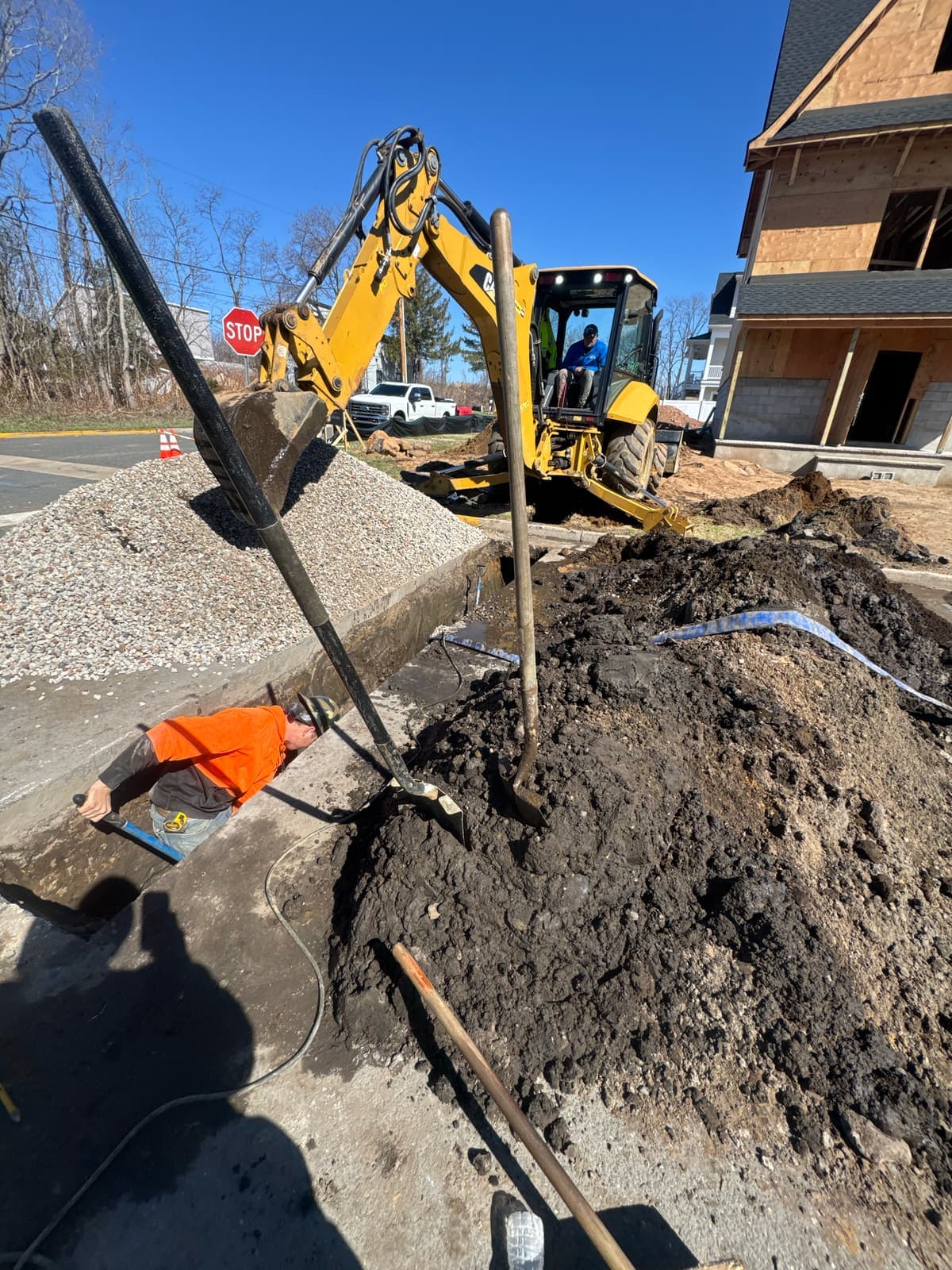
Residential earthwork goes better when the machine fits the property instead of the other way around. The lineup runs from a gate-width tracked skid steer to a telehandler and a dump truck, which covers a tight ranch-house side yard and a full foundation dig with the same phone call.
Matched to the access, not the ego
The equipment list runs from a tracked skid steer narrow enough for a backyard gate to a 5-ton excavator, a telehandler, and a dump truck. The machine gets picked after we see your driveway, side yard, and scope, not before.
Built for fenced, finished yards
Plenty of Edison-area homes sit on fenced lots with a narrow strip between the house and the property line. Compact machines get through that gap, so the work can happen close to the foundation and the beds without pulling a fence panel to get in.
The lawn counts as part of the job
Ground mats go down, the travel path gets planned ahead of time, and spoil stays in one spot. Turf, trees, and pavers around the dig are treated as things to protect, and the site gets cleaned up before the machines leave.
Handed off ready
Grades set with a laser, spoil contained, the work zone swept. Whoever comes next, the concrete crew, the landscaper, or the township inspector, finds a site that is ready for them.
What happens after you call
From the site walk to the final cleanup
1. Site Walk
We visit the property by appointment, check access and any constraints, and go over your plans or what you have in mind.
2. Marking & Layout
The layout is set on the ground with laser accuracy. Depths, lines, and elevations are marked before any digging starts.
3. The Work
The right machine for the access comes in, ground protection goes down where needed, and disturbance to lawns, trees, and hardscape is kept to a minimum.
4. Clean Handover
You're left with a site ready for the next step and a yard that's still in one piece.
Have a project in mind?
Send a note or call, and a time gets set to come see the property and talk it through.
Request a Site Visit